Bathroom Tiling Malvern

Set out first, laid second
Tiling is the finish everyone sees and the trade with the least room to hide. Every earlier decision — where the floor waste sits, how flat the walls were left, whether the screed falls correctly — arrives at the tiler’s hands and either helps or costs a day.
We treat tiling as a set-out job before it is a laying job. The key sightline is chosen before the first cut, so full tiles land where the eye rests and cuts are pushed into corners, behind the door swing or under the vanity. A failed set-out is rarely repaired with grout. It is repaired by lifting tiles, which means re-cutting, re-sealing penetrations and disturbing a membrane that was never meant to be drilled twice.
Flat, fixed, square
Why tiling waits
Water has to leave
Formats, patterns and what each one demands
Large format
Small format and mosaic
Herringbone and vertical stack
Niches, shelves and edges
Niches are framed and waterproofed before tiling, then set out so joints run through them rather than stopping awkwardly at the frame. Shelves are laid with a slight fall so water drains back into the shower.
External corners are either mitred — tile cut at 45° for a continuous face — or finished with a metal trim in aluminium, brass or powder-coat. Mitres read cleaner; trims are more robust on traffic edges. Movement joints go where tiling meets a different material, at internal corners and around the perimeter of larger floors, in flexible sealant matched to the grout. This detailing is decided during design and selections, then carried through on site — particularly on shower rebuilds and hobless walk-in showers.
Five decisions that fix the finish
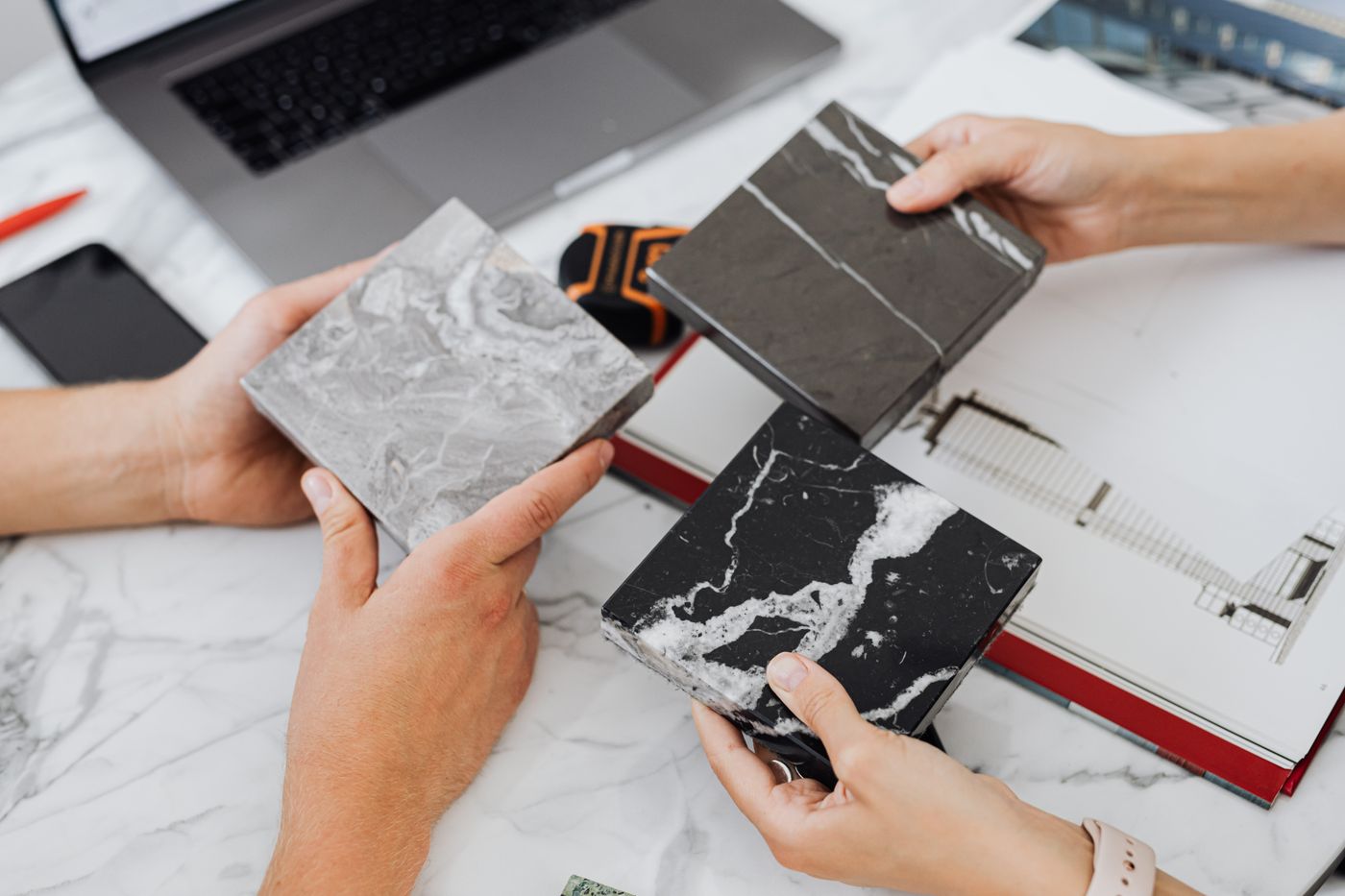
TL-01 FORMAT — wall and floor sizes set the grout-line rhythm, the number of cuts and how flat the substrate must be.
TL-02 FINISH — matt, satin, polished or textured. Polished walls lift light; polished floors do not belong in a shower.
TL-03 SLIP RATING — wet-area floor tiles are chosen on their slip rating as well as appearance, and confirmed before ordering.
TL-04 GROUT — colour and joint width. Matched grout quiets a pattern; contrast grout draws it. Rectified tiles allow narrower joints than pressed ones.
TL-05 TRIM AND SEALING — mitre or metal profile at every external corner. Natural stone and some unglazed tiles need sealing before grouting and re-sealing over time; porcelain generally does not.
Tiling questions
Can you tile over existing tiles?
How long after waterproofing can tiling start?
What grout joint width should we use?
Do stone tiles need sealing?
Get a free quote on your tiling
Send your room dimensions, tile selections if you have them, and photos of the current bathroom. Tell us whether tiling is standalone work or part of a full renovation, an ensuite or a small bathroom.
Related pages: Waterproofing · Shower Renovations · Walk-In Showers · Bathroom Design · Design references · Malvern, Armadale and nearby suburbs.